Its The Little Things


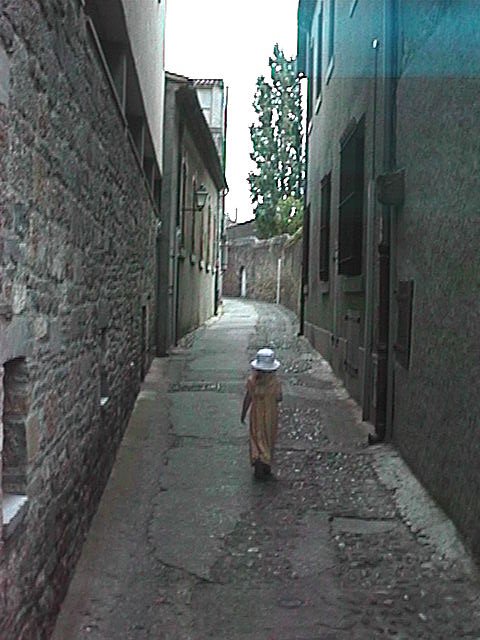
Certain little girl in France. 2000

He doesn’t remember important dates like anniversaries and birthdays.
He doesn’t  like to buy expensive gifts and things that don’t pay.
He doesn’t always think ahead when he starts to speak,
He doesn’t do the romantic, when the practical will serve to treat.

He isn’t always sensitive to my moods and needs,
He isn’t always there for me, or, maybe, that’s just how it seems.
He isn’t always careful, and he can be a dreadful tease,
He isn’t always kind, but he tries to be.

But none of that really matters, because he so good you see,
At all the little things.

He takes me out to walk about and gaze at starlit skies,
He tickles me and makes me laugh until I cry.
He swings our girl out on her swing and tells her lovely tales,
Dances in the living room with her toy dolphins and whales.

He runs down the hall in fear of her monsters there,
and dresses up and drinks her tea – then he makes me swear.
Not to tell a soul and always to conceal,
That he’s just a big old softie when it comes to a certain little girl.

He washes dishes and does laundry when I’m sick and ill,
Cares for me and worries deep and still –
Laughs at my paltry jokes and listens patiently,
As I spout long and loud on things that bore him patently.

It’s the little things you see, that make me love him so,
And I will continue to, as long as stars will glow .
He makes me feel all warm and loved deep inside,
Even though all that mushy stuff makes his face glow bright.

For he feels silly and odd, being romantic and such,
But that doesn’t matter, its for all the little things that I love him so very much.

It Coulda Been Worse


The old man sat in the lawn chair by the newly set headstone, and gently traced the name of his wife of over fifty years. As his hands caressed the words following her personal particulars, a soft smile came to his face as he read the epitaph. Quietly he said the words, “It coulda been worse.”

His mind wandered back over sixty years to a hot summer day on a dusty street in a small town in Oklahoma. An old tin Lizzy clanked and clattered down the road, and shuddered to a stop in front of the general store. With a loud bang and hiss, the car seemed to lie down in exhaustion as the doors burst open and a teeming mass of children and dogs tumbled out in a seemingly endless stream. The last one out was a small red haired girl. Covered in enough freckles to compete with the local red-tick coon hounds, and wearing a faded dress patched with cotton flour sacks, she stood on the running board like a queen surveying her kingdom. Hopping down she stood appraising the old car, sighed and said, “Well, it coulda been worse, we coulda broke down in the desert miles from water.”

The small, ragged boy, who had watched the whole show, grinned at her words, grabbed his slingshot and sauntered over for a closer look. He looked the girl up and down, stuck out a grubby hand, and said, “Hey, my name is Henry Oxley, Y’all stayin’ here?” She grinned a gapped toothed smile, pointed at the car, and asked him, “What do you think? That car ain’t goin’ no place soon. If’n thar’s work here my Pa’ll stay, and I’m Maude Tuttle. I know it’s an awful name but it coulda been worse, I coulda been called Mud Puddle.” Her words took the wind right out of Harry’s sails, because Mud Puddle would have been exactly what he would have called her the first time he had a chance. Maude had a way with things like, that, she’d say just the right thing to take any chance of hurt out of a careless word.

Henry and Maude soon became the best of friends. Anywhere one was, the other was sure to be right behind. Harry took a lot of teasing from his pals for a while, until Maude stepped in and showed them she was just as good, if not better than they were at throwing a baseball, spitting, and stealing the occasional watermelon to share down at the creek on a hot summer afternoon. Before long, Maude became a regular member of the small group of poor farm kids who ran free in the woods around the small town that endless summer.

The years went by and they shared all the adventures of their lives from getting caught skipping school to go fishing, to getting lost in the snow on the way home from town one day. Maude could always be counted on to find something positive about situation just when it seemed at its worse. The words, “It coulda been worse” became her trademark statement, and darned if she wasn’t able to come up with a reason why it could have been every time. On the day they nearly froze to death when they were twelve, they had managed to wander into a barn and after groping around in the dark, they found enough hay to make a place to sit. Huddled together to stay warm, teeth chattering, hearts filled with fear, and bellies rumbling with hunger she turned to Henry and said, “It coulda been worse, we might lose a finger or a few toes, but at least we didn’t lie down and die in the snow.” Henry, who had been contemplating life as a fiddler wasn’t too amused, but he could see her point. When they were finally found the next morning, Harry got a visit to the woodshed with his Dad, but it coulda been worse, his Ma coulda kissed him in front of everyone like Maude’s Ma did her.

When Maudie turned 14 something mysterious and strange began to take place, she turned into a woman. That caused no end of confusion to poor Henry. His best pal went from being a grubby, dirt covered, barefoot ragamuffin in torn overalls to being a Female, with a capital F. She wore dresses, and, heaven help him, took to washing her face every day. It was just downright disgusting. Until one day he happened to really look at her and realized that she sure coulda been worse on the eyes that she was. It took a year or so, but Henry finally grew up enough to appreciate Maudie’s new looks. Soon they went from seed spitting contests and shooting at trees with sling shots, to exchanging shy smiles and holding hands when no one was looking. It didn’t surprise anyone when they told their families they wanted to marry when they grew up. After all, as Maudie put it, it coulda been worse, at least Henry would always have a job working on the family farm.

Life has a way of changing the best of plans. War broke out across the sea and the enemy had to be stopped. Like all fit young men, Henry volunteered to defend his country. Maudie and Henry married in a quiet ceremony on a Sunday afternoon at the local church. It wasn’t much of a celebration because Henry was going off to war then next day. As he stood next to his brand new wife, he tried to say all the things in his heart, and apologized that her wedding day was so simple. Maudie, smiled her sunniest grin and said, “Oh, Henry, it coulda been worse, if I’d had a big fancy wedding we would have had to invite all the folks we don’t like. This way, it was just those we love best and the Lord,” and darn it all, if she wasn’t right.

Henry went off to war for four long years. He wrote letters home to Maudie, letters that she would read over and over before putting them in an old cigar box that she tied with a pink ribbon from her bridal flowers. Henry didn’t talk much about the war, he would write about the things he wanted to do with the farm when he got home. He would talk about the men he served with, and once he told her about running into Junior Bonham in a small town in Italy in the middle of a battle. She wrote back every week, and reminded him of the things of home. She would tell him about the baby chicks that she found under the corn ric in the barn, the new calf that old Maisy gave them each year. She talked about his brothers and how John went off to war as soon as he was seventeen, but before he left he married Suky Williams and they made him an uncle of a baby boy. She told him about moving in with his parents when his Ma came down with pneumonia after working in the rain too long, and that she just stayed on because his Ma was never strong again. She told about the way they did without tires and gasoline for the war effort, and she said that sugar was harder to find than hens teeth, but it coulda been worse because at least they could cook up some sorghum for sweeting. But she didn’t tell him that once a month she would go to the movies in town and watch the news reels in hopes of seeing his face as the soldiers marched by the cameras.

Then one June day, just when the corn was about knee high, Henry came home. She was bent over the old wash tub in the front yard, scrubbing the mud out of yet another pair of overalls for one of the younger boys. She looked up to see him standing at the yard fence with his duffel bag slung over his shoulder and a tired look in his eyes. Well, she thought, it coulda been worse, my man is alive and whole, Junior Bonham never came home. Henry just stood and stared at his Maudie all grown up. And when he finally took her in his arms, all he could feel was that he was thankful to his bones that he had her to come home to. Henry was always quiet when it came to talk about the war. He didn’t bring it up, and he never made it sound as fun as the other boys did when they came home in twos and threes, he just quietly folded up his uniform and took that old duffel bag up to the attic and never took it out again.

The years slowly rolled by and Maudie gave him a house full of kids to raise in the old home place. His Ma and Dad passed on, and he took over the farm while Maudie raised kids, kept house, and filled a garden with plants to give them a root cellar full of food every winter. They lived through hard times and good times, standing together when they needed and always loving each other even when she was spitting mad at something he had done, or he was worried about money and took it out on her. There were moments that stood out in his memory, like when their first baby was born in the middle of winter and caught the whooping cough and almost died. Maudie fought for that baby boy with all her soul and strength. When he finally started to mend, Henry held her in his arms as she wept in exhaustion and relief. There was the time he got caught by the falling tree when he was logging in the winter to make ends meet. When he came limping in with a broken leg and stitches in his head, she just shook her head and went about trying to figure how to make it with him laid up for weeks.

In good times and bad, Maudie stood strong for her family. When things were bad, she would always find a reason why it coulda been worse. She helped her neighbors, served with the ladies in her church, took care of the old and the young, laughed her big laugh, and cried silent tears, but she always just kept on doing what she thought was right. When she was a young mother, she’d come to town on Saturday with a gaggle of red headed, freckled faced kids following behind and as they grew older, she would often be seen with one of her grandchildren holding her hand as she did her shopping. And always near would be her Henry with his quiet ways and slow smile to compliment her.

One day Maudie realized she wasn’t feeling too good. Her red hair had long since turned white, and her freckles competed with age spots for space on her skin. She was bent and slower, and soft in all the right places, with a lap just perfect for a grand baby to sit on. She finally took herself off to see the young man who said he was a doctor and he told her that she was going to die. Well, he put it nicer than that, but Maudie knew that is exactly what he meant. She went home and took a long look around at the farm, talked to the grandson that worked there and who was taking on more and more as Henry slowed down a tad, and decided it was time to settle her life.

Maudie gave away all her treasures to her family and friends. When she gave the old cigar box of letters to Henry, she made him promise not to destroy them but to pass them on to their kids when he was ready. She wrote long letters to her children and grandchildren, and she spent hours sitting quietly remembering the past with Henry. He knew she was sick, everyone did, but they all carried on like she wanted them to, pretending she would be there forever. In a way she would be, because every now and then there would be a little red headed, freckled faced girl crop up among the grandchildren who looked just like her. Or there would be an ornery grandson who laughed her big laugh and smiled with her gapped toothed grin. But Maudie knew she was dying, and when it came time to say goodbye, she took the time to see each one of them alone and whispered encouragement, hope, and love into their ears and hearts.

One hot summer day, Maudie was sitting on the front porch in her favorite chair, she turned to Henry and said, “Well, Henry, I guess its time to go. It coulda been worse, at least I stayed around this old town for nearly 60 years.” That night, Maudie died in her sleep.

The funeral was attended by just about everyone in the county. Every farmer, storekeeper, and rancher knew Maudie Oxley. Her family took up five rows in the church, Henry thought Maudie would have been proud to look down and see so many of her kin folks there. They buried her next to his parents in the cemetery by the old church. Henry turned into an old man over night.

That day, as he traced her epitaph, he whispered to his Maudie about all the things that were happening in the lives of their children and grandchildren. He told her of his loneliness and how much he missed her. Henry folded up the old lawn chair, tears rolled down his face as he said, “I know you’d say it coulda been worse, but Maudie with you gone, I just don’t know how it could be.”

Fairy Story (for Crystal)


“You could dance,” she said, to the small fairy under the oak leaf,  in the moonlight with silver streaks in your hair. “Or, you could walk the edges of the shadows and dare the night to catch you.  Come along, no time to weep, we must begin the revel, and you must put away your sorrow. Tonight you will learn to laugh away the sadness and find joy for tomorrow. Come, out from there. You are not a child any longer, live you will, live you must, and the mortal man you have loved, will, in time, become less and less of a memory.  Come, dance, it will lift your heart from its depths of unhappiness.”
In a swirl of moonlit silver the queenly figure danced away to a tune only heard in the fairy ring, deep in a forest glen.  The pipes and drum were played swiftly in a crescendo to match the flying notes of the violins. The small glen was awash with swaying and prancing minute figures, who, in sudden joy, would unfurl wings of shimmering gold and float far off the ground , spreading an incandescent light all about the trees.
One, however, sat alone under the oak leaf near her home tree, knees locked in her arms, head down, weeping.  She had just arrived from the outer world of humans, a world where, for many of the human years, she had lived the illusion of being one of them.  A time, when against all advice from her fellow fairies, she loved a man.  And, as these things often do, he aged, grew tired, and finally, despite all her magic, died. She grieved there among the leaves, and saw no joy in the morrow. The small fairy felt so odd being back to her given size after all those years away.  She didn’t feel free, she felt small and insignificant. Sitting alone, the near shadows creeping ever closer, the soft silver of her hair hid her face and the deep green eyes so common among her kind. Her magic aura kept skipping around her, first purple, then green, then a bright, glowing gold, but she took no notice.  She wanted to be alone.  Alone, so she could suffer and no one would tell her nay.
In time, the fairies tired and flew away to homes and beds among the trees. The music stopped and the musicians fell asleep under the nearest toadstool or flower, content that they would be safe in the magic around them. As the stars faded one by one and the sun began to turn the deep night into dawn, the fairy stirred from her place and stood to face the ever brightening east.  One loan piper watched and began to play a soft, somber melody.  In a clear, sweet tone, the music reached into the heart of the sad little fairy and she began to dance.  She danced for the long years she and her man would be apart, for a fairy lives nearly forever. She danced for the sorrow she felt, and she danced for solace from pain.  Around the fairy circle she danced, twirling and leaping in an every increasing frenzy.  Then, when it seemed she must take flight to survive, she dropped to the soft green grass, and slept.
The piper, alone in the magic of the small fairy, stared at her in awe.  For never had he felt such power, such magic, from within the circle. As the fairy slept, the sun rose higher, creeping across the glen, ever closer to her.  Its warmth sent rays of comfort to her heart and mind as she slept the cleansing sleep.  One stood watch, the piper, and in time he placed a leaf over her for protection and added warmth. All the day long, as shadow chased the sun, he watched and tended the needs of the powerful, yet sad, little fairy.
As all things do, the day came to an end.  One by one the revel makers came back to dance under the full moon, only to stop when they saw the gentle fairy asleep in the midst of their circle.  They came one by one, quiet and in reverence, for the piper told all in the silent fairy language – from mind to mind – what she had done.  They stood, waiting for the magic to begin again, so that they could, too, partake.  Slowly she stretched her arms and legs, rolling on to her back.  A yawn later she was standing before them in all her silver glory.  She smiled, and the crowd of fairies gasped at the beauty of her face.  Then in a voice, soft, sweet, and warm as honey, she told them of her dream.
“I danced, alone in a garden circle, filled with the aroma of roses and lemons. I danced alone, in the magic of moonlight, with a piper only to urge me on.  I danced, in joy, in sorrow, and in pain.  I danced for love, for suffering, for solace.  I danced, to complete my circle and to end from whence I began.  Alone, I tread the world of mankind.  Alone, I tread the circle.  In my dream, my true love came, not the passion of youth.  I took his hand, felt his magic, and knew eternal love.  In my dream, I am whole, in my dream I am true, in my dream I am magic.  And now I wake, surrounded by love.  I know that I am home.
I will miss the man of  my youth, I will love him always.  But here, among the fairy ken, I will find a magical joining.”
All the males surged forward, hoping she would hand-fast them, for her beauty and magic shown about her.  But, she turned and walked to the edge of the shadows, and took the piper’s hand.  “This male,” said she, “will fill my life with gentle compassion and love.  I, in return, shall be his muse, and magical music there shall always be.”  She bowed to the queenly figure, who bowed in return, and walked away through the trees.  Now and then, when the wind is right, and the moon is softly full, wanderers will hear a sweet melody played upon a pipe. In their hearts a yearning will grow to turn to the one they love, to hold them and tell them so.  It is, of course, the small fairy and her piper, leading hearts to hearts still yet, for they will live nearly until forever.
K.J.Combs
26, November, 1998

Changes


I was thinking about Grandmother today. She is in her late nineties.  Nearly one hundred years old. I started listing, in my head, the changes in the world in her life time. She was born, raised, and has lived all her life right here in Oklahoma. When she was a girl, there were no highways, no cars for the farmers and ranchers, no electricity in every home, no indoor plumbing, and no telephones. Laundry was done in vats of water heated over an open fire in the yard, and hung to dry on fences and bushes.  Bread wasn’t made in a bread maker or picked up at the grocery, it was homemade, sweets were a luxury, and the most common form of transportation was one’s feet.
Grandmother has seen the coming of air flight, men walk on the moon, and space exploration. The modern age of medicine that can keep a person alive, almost indefinitely, began in her lifetime.  Today, there are cures for disease that used to wipe out whole generations, and that cure is one dose of medication. Today, there are diseases that were unknown in her days as a mother that can devastate and devour children and adults, and we still have no cure for them.  But, maybe, when we are nearly one hundred years old, there will be.
She had never heard of computers, modems, the internet, or Microsoft, and still thinks computers are toys that just beep and make noise.  Grandmother never played with a Gameboy, skateboard, or had a dolly that talked, drank a bottle, and had to have its nappy changed.  She was doing the work of a full grown woman at the age of 14, not talking on the phone and wondering when her parents were going to understand her.  She was much too busy, cooking, cleaning, working the farm, and looking after her family to worry about such mundane things.  It wasn’t because her parents were mean, it was because everyone had to work together, and work hard, to survive from year to year.
She watched the oil boom and bust here in Oklahoma again and again.  She saw the slow pace of the world around her become faster each generation, until it seemed to spin by so quickly it made her dizzy.  In her day, courting was done on a Friday night, or Sunday afternoon after church, in front of the entire family, and a kiss was a commitment.  Movies were not common, and when they finally came to her town, it was an EVENT to go to a movie.  Smoking was something men did, and if a woman smoked, well, she was fast. After the cultural changes that took place in World War II, grandmother still thought women who smoked were fast, but she learned to adjust like everyone else.  She saw women move from the home to the workplace, first as they needed to support families torn by war, then as the feminist movement dictated.
She once told me that she understood why so many women wanted to work outside the home, after all, the house practically takes care of itself.  Look at all the modern appliances now.  Vacuum cleaners, no more need to move and beat rugs every week; refrigerators, no need to have ice delivered or bottle foods and put them in the cellar; washing machines, no need to spend the day bent over a scrub board and washtub.  Chemicals that clean and scrub all by themselves, air conditioning, and heating that doesn’t require the chopping, hauling, and use of wood to warm the house.  Frozen foods and microwave ovens means that a meal can be prepared in minutes instead of hours. With that much time on their hands, women were bound to want to go to work.
In her life time, she has lived through two world wars, Korea, Viet Nam, and Desert Storm, plus many other warlike crises that involved the United States.  She has seen the advent of equal rights, feminism in its modern form, women in the workforce, commonality of divorce, welfare replace charity organizations, the move from an agro-economic based state to an oil/industrial based state, and cycle of  birth, life, and death repeated over and over.
There are four GENERATIONS of family living who are all directly related to Grandmother.  Each on has gone through the trials of its particular age.  Grandmother gave birth to three boys.  One became a lawyer, one a doctor, one a businessman.  None of them stayed on the farm, and when Grandfather retired, they moved to town too.   Her husband served in World War I, all of her boys served in World War II, and her grandchildren in other serious actions.  Her boys were in the first generation to be in the mobile age, cars became common, and life started to move faster.
Her grandchildren were in the midst of the “revolution” of the turbulent 60’s and 70’s where cultural, social, and family standards were obliterated and rebuilt into something most of us are still trying to figure out.  Her grandchildren were the first to shout about “rights” and experiment with sex, drugs and rock and roll openly.
It is her great grandchildren’s generation who saw the advent of gender issues, openness of alternative lifestyles, lifestyles, by the way, that grandmother still whispers about in vague euphemisms because they embarrass her mightily. Her great grandchildren have taken the word “alternative” and turned it into a an icon for whatever they want to do since there doesn’t seem to be a particular pattern to follow any longer.
Her great great granddaughter is just four years old, but already understands how to use a telephone, computer, and all about money.  She knows the microwave will heat things, and the refrigerator will keep things cold.  She knows more about television and how it works than Grandmother ever will.  She knows more about the world at four than Grandmother did at twenty, or even thirty, because she has been on a jet plane to England, she has gone across the United States in a car, and visited the great monuments to the past. Her world is even more complex than that of the previous generation, and one can only suppose what will come in the future.
Grandmother won’t be with us much longer.  She is a tiny, withdrawn, elderly body that sleeps most of the time.  She needs twenty four hour care, and she will probably never remember my name again.  She deserves her rest, and our deepest respect.  Grandmother has become an icon, a symbol, of all that glued this motley crew together as a family.  She is the last of her generation, the beginning fabric of all of us who live and when she dies, we will begin, slowly, to unravel into separate groups, until all who knew her are gone as well.
It is our progeny, then, who will remember us as we remember her. We will be the old folks who were so odd with their love beads, pot, and wine.  The old folks who wore funny clothes, used archaic communication devices like telephones that plugged in, and the internet.  We will be the ones that our progeny look back on with affection, and, hopefully, respect.  Like Grandmother, we will weave the fabric from whence our family grows.  Will we, like Grandmother’s family, slowly fray and unravel?  Probably, but that is the beauty of it all, because each succeeding generation gets to weave a new pattern based on the history and colours of the last generations. By adding a bit here and a bit therefrom the past, and new colours and patterns from their lives, the fabric lives on and on.  Sure the stitches and weave are different, but the threads of life are all tied together and become stronger as each generation grows.  That’s what family is all about. Grandmother would approve.

The Colours of Our World


The Colours of Our World
She painted the sky purple and the grass red. The flowers were streaks of pink on black; the house was crooked and orange with bright green swirls of smoke coming from the slanted chimney. The sun was a bright yellow circle with a smiling face painted in it, and the stick figures were dancing around the fanciful garden.
When the teacher bent to tell her that the grass should be green, the sky blue, and that the sun didn’t really have a face, the little girl looked at her and said, “Why not?” Being a grownup who believed in remaining firmly planted in reality, the teacher sputtered, “Because! That is how it really is!”
The little girl smiled winsomely at her teacher, and with all the wisdom of a five year old said, “Only if your old,” and happily applied another coat of purple to her sky. As she freely expressed her delight in the colours of her world, the little girl was teaching a lesson that would do all of us “grownups” good.
Sure, we all know reality. We are familiar with every shade of grass and sky. We have all the facts, figures, and knowledge accumulated through our lives. We are experts. In lock step, we move along our tunnel vision lives leaving behind the images of imagination to focus on the business of life. We base our very lives in the context of what is real. Or is it?
When was the last time you danced for the sheer joy of it? When was the last time you sang in the shower, or ate Jell-O out of the bowl straight from the refrigerator? When was the last time you took time to feel the texture of your favourite old sweater with your fingertips while your eyes were closed? When was the last time you caught rain drops on your tongue, or splashed in a mud puddle, or allowed yourself to be soaked to the skin in a sudden rain storm? How long ago was it that you last marched along humming a rousing rendition of a patriotic song? When did you stop seeing the magic in your life?
When we stop dreaming, when we stop seeing purple skies and red grass, when we stop yearning for magic in our lives – and finding it – when we forget that reality is what we make it, then we have forgotten the colours of our world.

Karron Combs
30 July, 2002

Childhood Memory


When I was a little girl, my sister, Carla, and I spent one year with my grandparents in Atoka County, Oklahoma. My grandparents still lived in the house they had built with their own hands when they got married. It was a two-room cabin with a lean to on the back for a kitchen. There was no running water, no indoor toilet, and the electricity hook ups would never have passed any inspection if they had bothered to come have a look. In the front room, where my grandparents also slept, was wood burning stove, a double bed with an old cast iron headboard, a dresser, and a small table on which the bulbous brown radio with the huge dial sat. My favourite piece of furniture in the whole house was the wooden rocking chair with the rope seat. All of the grandchildren would fight over sitting in that chair, until Granddad would look up from what ever he was working and say, in his quiet but firm voice, “Here now, y’all stop that fussin’.”

 I remember it was cold that winter, but we went off to school at Harmony School every morning on the big yellow school bus. Every day Grannie would get us up and we would dash from the cold North Bedroom into the front room to stand by the stove as we raced to get our clothes on before we froze to death. I was in first grade, and scared to death of making a mistake. Mrs. Graham was the teacher for grades one through three – all in the same room. She was at the school her entire career as a teacher, and still remembered us up until she died a few years ago. I think she remembered every student who ever walked into her classroom. She was the kind of teacher that I would desire to be if I taught children. I can still remember her looking over her glasses at me, smiling and saying, “Of course you can learn this word, it isn’t too hard to read.” And learn it I did because Mrs. Graham never accepted less than one’s best efforts.

 When school got out for the summer, Carla and I had to go to work with our grandparents. Grannie worked at a laundry that did washing for hotels and restaurants as well as regular folks. I remember the huge whiter than white sheets hanging on the seemingly endless clotheslines, the heat of the clothes press and the steam billowing up as the sheets and tablecloths were ironed every day. The laundry stood in an old building that seemed to be half tin and half falling down bricks. It smelled of starch, steam, water, and freshly aired cloth. The women chattered, laughed, shouted, and aimed an occasional swat at one of the multitude of little kids running around during the summer.

 Granddad worked at a garage as a mechanic. I love the smell of the place. I still get nostalgic when I step into an old fashioned garage that smells of grease and oil. Every morning the new tire smell battled with the odour of fresh brewed coffee strong enough to melt a spoon. I used to play in the office in an old wooden chair. If I did things just right I could get it to spin in great circles while rolling across the floor. In the afternoon, when it got hot and sticky, I could climb up into the cab of Granddad’s pickup and have a nap. He would always wake me up around three with a cold Nehi Grape Soda to refresh me.

 At lunch every day, without fail, Granddad and I would go pick up Grannie and Carla, and the four of us would stop at the little gas station near the Railroad Bridge to buy lunchmeat, bread, and drinks from their deli. Then we would drive out of town and find a place to stop on a dirt road to have our lunch. Granddad would park under a shade tree, near a creek if he could find one, and we would all climb into the back of the truck to have lunch. Nothing tastes better than a pickle loaf sandwich and a cold soda pop on a hot summer day. The memory of those afternoons seems to be imprinted on my heart. All of my senses were involved in those hours. The smell of dry dusty roads, the feel of the soft breeze, the whirr of grasshoppers in the tall weeds, birds squabbling in the trees, and the taste of ice cold soda pop on a parched tongue. All were brought together in a kolidascope of colours to satisfy even the most discerning artistic eyes. If Granddad was in a good mood, Carla and I would be allowed to sit in the back of the truck until we got to the highway. I know, now, that we didn’t go very fast, but it seemed to us we were flying down the road throwing up huge clouds of dust behind us.

 I rarely go back to Atoka County, it just isn’t the way I remember it. My grandfather passed away and Grannie moved to town. It is where my parent’s “people” are from, and I suppose it is really the only home I’ve ever really known as I’ve lived all over the world since then. But, always in my heart stands the memory of those cold winter days, boiling summer nights, and simple times.

Ride From Amarillo


Ride From Amarillo

Today I caught a ride from Amarillo, Texas to Gallup, New Mexico. The old geezer that picked me up was a hard case from some place up north. He didn’t talk much at first, but he was friendly enough. Most old guys won’t pick up a hitchhiker these days. I look kinda rough too since I ain’t had a shave or bath in three days. I don’t know what made him stop, but I sure was glad to have lift. It was getting’ hot standin’ on the road with my thumb out.

About 60 miles down the road, the old guy asked if I was hungry. I wasn’t gonna tell him I didn’t have no money to eat, but he said he would be happy to get me a burger or something. So we got off the highway and pulled into a burger joint. It was one of them old kind where someone comes out to your car with a load of food and hangs a tray on the window.

When we headed back on the highway into the setting sun, he finally started to talk to me some. He asked all the same questions everyone asks me. I told him I was just wanderin’ cause I didn’t know what I wanted to do with my life yet. Usually I get some sort of lecture about being sensible and finding some sort of career, but this old guy really surprised me because he did just the opposite.

He told me about when he was a young guy, younger than me, he ran off from home during the depression. He said there wasn’t food enough to feed him and he knew if he left his mother would have enough to eat. So he just up and ran off one day. Back then the times were real hard, and no one had much of anything so he took to riding the rails and learned how to survive from one day to the next. He knew what it was like to be hungry and alone, and he sure knew how much he appreciated it when folks would help him out by giving him a meal for doing any sort of work they could find for him. So he figured he owed it to someone to help out anyone who needed a helping hand. That’s why he picked me up, he saw a lot of himself in me and knew it was what he needed to do.

I asked him if he ever went back home after the depression and he said no. He said he got all the way up north to Washington State and found a job at a sawmill. He just stayed on and after a while World War II broke out. He enlisted in the Army and went off to war. While he was gone, his mom died, and all his brothers and sisters scattered during the war. He said he never really knew his dad, he left when he was still a kid. After the war, he went back to Washington State and got a job logging. Then after a while he met a girl and got married. They settled down and had kids, and life went on.

 He got real quiet then asked if I could drive for a while. So I got behind the wheel and he dozed off. As I drove west, through a sunset that turned the sky red and purple and the land blue and orange, I thought a lot about how it felt to be alone in a place where I didn’t know anyone. I thought a lot about the old man sleeping next to me and all that he had told me. He had lived a long life, and he had done a lot of things, but he had always remembered those first days when he was alone and scared and hungry. Those days painted his life in more ways than he had ever imagined they would. Because at 75 years old, he was still trying to pay back all the help he had been given from strangers.

 I wondered if I would be trying to pay back strangers my whole life too. I wondered how my mom would feel if I didn’t ever come back home, and she died wondering where I was. And I wondered how I would feel when I was 75. Would I feel a deep need to pay back the ride and meal from an old man who picked me up on I-40 outside Amarillo, Texas on a hot summer day? Deep inside I knew I would find a way to help someone else some day. And I knew I would go home again when I figured out what I wanted.

 After a time the old man woke up and we talked through the deep night until we got to New Mexico. He offered to put me up for the night but I said no thanks and he dropped me off at a truck stop. When I got out of the car, he gave me 20 bucks and told me to eat decent meal and get a shower. I went inside and made a call home to mom. She was glad to hear from me, but didn’t nag me to come home. I was glad about that. One thing has been bugging me for a while now. I didn’t think about it until he drove off, but that old geezer never did tell me his name.

I am going to catch some sleep back behind the truck stop. The cook said there was an old building back there I could sleep in. Tomorrow I want to try to make it into Arizona, but if I can’t catch a ride I may try to find some work around here so I can get some money up for the time being.

Cleaning My Closet


Today I was standing knee deep in stuff I cleared out of a closet in my granddaughter’s bedroom. As I stood there amid the broken toys, cast off clothing, and miscellaneous pieces of discarded rubbish, I saw it as a sort of metaphor for my life.

Once, like all those toys and clothes, my life was shiny and new. I was excited about the future and everything looked and felt right. The toys were going to bring me ultimate satisfaction and fulfil their roll forever, and I was never going to change so all my clothes would always fit. I never, not once, thought about the fact that life is always changing. I didn’t plan on out growing anything, nor did I plan on finding the toys boring as I changed and grew within.

At sixteen, newly married, in the middle of the hippie era in San Francisco, I was free to experiment and play with all sorts of new ideas and life style choices. And boy did I play hard. Like a child let loose in a toy store, I had to try everything new. But, like a spoiled child, I soon threw aside each new thing because I became bored, or saw something brighter, bigger, and more exciting to try. Eventually, like all children needing boundaries, I got bored with all of it and started looking for something to give meaning to my life.

At nineteen, I was a mother, and everything changed. All the toys of my childhood were useless and soon gathered dust in a closet that would, in time, become filled with cast off and forgotten things. By twenty-one, I had two young children and a husband who was obsessed with his career. We moved from place to place as he changed jobs and worked his way up the ladder of success. Each move caused me to place more and more of my discarded life into that closet. Soon the floor was covered, and I was working my way up the walls. No matter how much I reorganized, I couldn’t bring myself to throw out the harmful toys, the unflattering clothes, or the old mouldy feelings of worthlessness.

Things moved along from day to day. Life went on, my children grew, and one day I found myself looking at that closet with loathing. I had changed so much that a lot of that stuff in there didn’t apply to me any longer. Broken pieces of rubbish, hateful feelings, anger, sorrow, and all the old things that no longer fit were wearing me down. I had found a new purpose in my spiritual self. I had found a place to settle, even if it meant my husband was away all the time.

Life got busier as the years rolled on, and more of my life traumas found their way into the closet, to be closed off so as not to effect my life. Why deal with anything when there was still room to stuff everything in the closet and close the door? I got older, my children got older, and my husband drifted further away. But that didn’t stop me from looking for new toys to replace the losses in my life. One of the best toys I found was food. Lots of lovely food, and all of it found a permanent place on my body. So, instead of dealing with my emotional needs, I fed them, and stuffed the extra feelings in the closet, even if it was getting harder and harder to close the door.

Then, one day, the door burst open and would never close again. My son died. There was no more room in the closet, and I couldn’t shove my hurt and broken heart in there. When I tried, the door fell down. All those old toys, past mistakes, broken pieces of my heart and soul, old clothes of my former self, and every single miserable hurt flooded out, knee deep, into the middle of my life.

I was so overwhelmed, I didn’t know where to start cleaning things up. Finally, after a long, fruitless struggle, I started by picking up one thing at a time. I would examine it, carefully, see if it had any possible value, if it could be repaired, or if it simply needed to be loved. I would then place it in a stack. I had three stacks; one for giving away, one for sharing with my friends and family, and one for the rubbish man. As each stack grew, I began to feel lighter, free, and most of all, I felt my spirituality come back. My heart began to find all it’s lost pieces, and the old clothes that were mouldy and no longer fit my new perspective on life, were easily thrown away.

Soon, I had three towering stacks of emotional toys and clothes to share, give away, or throw out. Sometimes the recipient of the items appreciated them, sometimes they passed them on and recycle them, but the things I threw away no longer hurt or annoy anyone. They are buried deep in some landfill that will become an eternal garden in time. There are some things I have kept because I just can’t get rid of them. Mostly they are memories of important moments that have changed and redirected my life. They are often painful memories, but memories I need to keep around so I will continue to be motivated to clean out my closet.

As I have gone through those stacks over the years, I occasionally add to them. The closet floor is pretty clean, although I do get lazy and just toss things in there from time to time. There is a new door on it too, but made of glass and it is very easy to see when I need to clean my emotional and spiritual closet. There is no hiding from myself now. It’s a good thing I am no longer searching for perfect things to fulfil me, because I have discovered that I am really just a plain, old-fashioned woman who enjoys the simple things in life. Eventually, with a bit of elbow grease and determination my closet will not only be empty, it will be clean and I will be free of greed, fear, and pain. I guess I’d best get back to cleaning my granddaughter’s closet. Metaphor or not, there is still work to be done.

Little Girl, Little Girl


Little girl little girl where have you gone?

Yesterday you were a laughing child twinkling eyes filled with laughter, and tumbling curls, flowing after.

In a dress of Pink and white, flowers all around. Baby dolls and little bikes, falling on the ground. Tears, and scrapes, band aids and drinks. Hugs and kisses, our hearts linked.

Little girl, growing up fast, with your girlfriends running past. Trying lipstick, high heels and dresses. Fixing hair, and polishing nails all attitude and tossing tresses.

France

One day the little girl was all gone, and there you stood. A woman grown all on your own. Eyes all aglow, in love with life.

Some times though I see, in your smile and twinkling eyes, that little girl with tumbled curls whose laughter filled the skies

Little girl little girl, where have I gone? “No where, look in your heart Where memories go on, and love never dies. There, your little girl lies.”

Grannie’s Hands


Her hands lie upon her stomach quiet and still. Telling, in their scared wrinkles, the story of a lifetime.

As a child her plump dimpled hands clung to her mother’s. They were, at times, covered with mud, sticky sweets, and all of the mess and mire of childhood. When she was a young woman, her hands were thin and lovely, yet strong enough to cope with the life she anticipated as the wife of a farmer. Those hands were adorned with a simple gold band, and, in time, held each of her newborn children.

They scrubbed, cooked, cleaned, and washed for her family. They comforted the ill, held the weary, and buried the dead. They were scared by fire, cut by life, and calloused by work. But to me, they were simply Grannie’s Hands.

I remember how they touched my face, braided my hair, and tied my shoes. I remember watching them as they sewed on buttons, kneaded bread dough, and planted flowers. They gently held my hands as I learned how to measure sugar for vanilla cookies, cried out my hurt feelings and fears, and poured out my heart when I fell in love. I remember Grannie’s hands reaching out to hold my first baby, and watching as she touched the face of her great great grandchild.

Her hands passed down instruction, discipline, talent, love, comfort, and compassion to four generations, and now, on her death bed, they are still.

But  as long as I live, I will remember Grannies hands.