
Have you ever noticed how the world seems to slow down in the fall? After a frantic flurry of activity getting things ready for winter, everything seems to go into slow motion, as if we are trying to reserve our energy for the coming winter. It doesn’t seem to matter whether a person lives in the city with all it’s distractions, or the country with all it’s resultant chores. It doesn’t seem to matter whether one is from the midwest, or the sunny coastline of California, we all have that innate since of season that encourages certain responses deep within.
I noticed, just yesterday, that the trees have all turned their fall colors. From the brilliant yellow of the Sweet Gum trees, the echoing gold of the Wild Plums, to the brilliant red of the Maples and deep rust of the Scrub Oaks the autumn display was in full force. I noticed, almost by accident from the top of the long hill just south of Meeker, that the entire valley and subsequent hillsides were covered, no longer in the greens and tans of summer, but cloaked, instead, in the hues of fall. It made me stop, metaphorically speaking as I was driving my car at the time, and realize that another year has almost passed by and I was not prepared for it to be so. How did the year get to fall, when I was still linked up with June? I guess it is true, what they (who ever “they” are) say is true, “As you get older, time moves faster.” I wonder if it has something to do with the “time-space continuum” so prevalent in all the Science Fiction novels. It’s a thought.
Autumn has always been a special time for me. I hate the heat of the summer, and long for the cooling breeze of the fall air to creep in at night. I love to lie and listen to the breeze whisper through the crackling leaves on the trees in their age old battle to blow them down to make room for next year’s crop. I like to see the wild animals, including humans, scurry about getting things in order for winter, and to see the dogs and cats come out of their summer lethargy to romp and play like puppies and kittens in the cooler air. I feel both energized and ready to hibernate. A strange juxtaposition of emotions, no doubt. I am energized to batten down the hatches and get every thing done, while ready to slow down and enjoy the beauty around me. It is usually the urge to slow down that wins the battle. I am always willing to be lazy as often as possible.
It is an art, being lazy. One must learn to do it correctly or the world will creep in and before you know guilt and the urge to be busy will take over. Being lazy starts with the most basic of moves, sit or lie down. From that point, begin to breath in a slow, calming manner and start looking about you from the new perspective of a sitting or reclining position. I noted, for instance, that the spider web in the left corner of my living room ceiling was really expanding. Now, I could have gotten up, found a broom, and knocked it down. That, however, would have put paid to my effort to be lazy. I, instead, simply watched a very energetic and determined spider spin away in industrious duty and let my thoughts meander on about the amazing architectural abilities of the anachroid family in general, and this spider in particular. That is part of the art of being lazy, detaching from the temptation to do something and simply taking time to think.
Now that autumn is upon us, we should be inclined to slow down, readjust our biological clocks, and find time to be lazy. We don’t have to get a tan, rush from activity to activity, or be as socially available as we usually are in the spring and summer. (A hang over, I believe, from when the urge to find a mate made us, as a species, much more active socially. Think on it . . .”birds do it, bees do it” etc.) In the fall, however, we can use all sorts of excuses to be lazy. It could be raining, well, at your house anyway. You need to get to that chore of swapping winter and summer clothes from storage to closet, never mind the fact that you didn’t do it in the spring. Oh, any number of inane excuses that would work come to mind. Find one and check out for the day. Get a good book, find a spot in the sun, or curl up with a warm blanket (or person of your choice), and listen to the music that makes you comfy, or to the birds and breeze outside. Be lazy, its good for the soul. After all, the work will still be there when you decide to be energetic again. That is one of the concrete facts of life . . . work never goes away.
I think I will go be lazy now and let my thoughts meander on to an unknown destination. Who knows, I might think great things and discover new truths for mankind. On the other hand, I may simply watch that spider spin her web instead. Enjoy!
In Response to this post: http://lornamurphy.wordpress.com/2012/10/04/whatmarriagemeans/comment-page-1/#comment-19
Open marriage generally refers to both partners having multiple sexual partners while married to each other. That, I find, belittles the entire purpose of marriage. Why bother, after all, single people have loads of relationships (I use that term lightly) while searching about for the one person they can fall in love with for life.
Having been married since the age of 16, 41 years ago, I tend to see the word ‘open’ in a different light. Open means that you don’t smother each other, that you are honest with each other, that you support each other in good and bad times, and that you encorage one another to grow, learn, and become the person they are meant to be.
For instance, I didn’t go to university until I was 36 years old. But, due to my husband’s constant support, I managed to earn three degrees in five years, and was on a scholarship in Nottingham, England when our son died and I quit school to take care of his daughter. Without the encouragement, support, and outright cheerleading my husband gave me, there were times I would have simply given up. Instead, I graduated third in my class, Magna cum Laude, Mortar Board Society, and Alpha Chi Honors Society. That is an open marriage. Because, trust me, we didn’t spend all that much time together during those five years.
We have vastly different interests on many levels. An open marriage means that I don’t try to force him to change those interests because I want him to do things I like to do. Instead, I encourage him to do those things, and occasionally go along with him, and he does the same for me. We don’t have to live in each other’s pockets 24/7 to enjoy our lives together.
Most importantly, an open marriage means that we work as a team. No one is the boss, and we both work hard to keep things good between us. We talk it through, sometimes after a yelling match and a few slammed doors, but we talk it through. We also agree to disagree and some topics we avoid because we both know it will lead to endless debates and neither of us will budge in our opinion. But, we respectfully agree that as individuals, we should and can have differences of opinion, and still love each other.
The whole sex thing, well, trust me, sex isn’t the be all, end all of a good marriage. Important, yes, vital at some points in life, but the most important thing is love. Love, when he gives you a foot rub after a long day. Love, when you cook his comfort food (even if you hate it) when he is stressed out. Love, taking care of him when he gets sick, even if he is a bigger baby than your two year old. Love, when he sits through yet another three hanky girl movie even though it bores him to death. All those little things, that’s what makes a marriage work.
On the Beach at Mui Wo
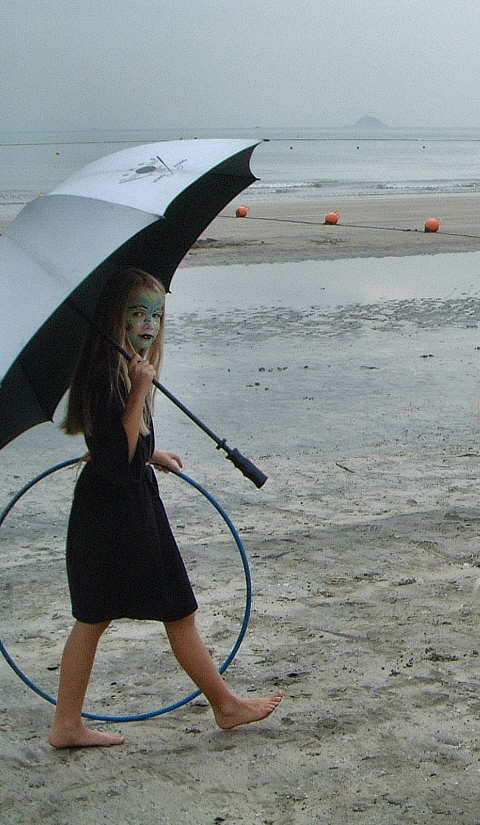
On the beach at Mui Wo the sea spills back and forth creating the ancient rhythm that both soothes a soul and, yet, causes one to dream of seeing the other side of the world.
An elderly man quietly works on his upturned fishing boat, cigarette smouldering as it hangs from his lips. The smoke slowly rises and wafts about his head, causing him to squint, narrow eyed, at his work.
An old transistor radio plays the atonal, to western ears, music so popular with older people here. The music is occasionally interrupted with newscasts wherein the announcer sells the news with the same enthusiasm and patter familiar in used car advertising.
On the beach at Mui Wo, two women. in hats that resemble upturned fruit baskets, slowly work their way down the beach. As they rake the sand and clean up the rubbish from yesterdays visitors, the shush of the rakes serve as a counterpoint to the sea and music. Their chatter, in high pitched Cantonese, is echoed in the descant of bird song.
Three dogs, strays or domesticated – one can never knows – gambol along. First in the sea noses to the wind, then, on the shore, noses to the ground. They stop and dig with unabashed joy, only to abandon that pursuit to scramble under the rocks, and when that bores them, they flop in a heap of bones and hair in the nearest shady spot to nap. On the beach at Mui Wo.
On the beach at Mui Wo, a mother with her child tip-toes to the edge of the sea. Both delight and fear echo in the child’s eyes. She tries to decide whether to touch the sea or run away. Her trill of laughter fills the air, and, for a moment, everyone smiles.
Two umbrellas sprout from the sand. Blankets are spread and tan bodies lie down to catch the morning sun. Coolers of drinks, sandwiches soggy from melting ice, and a tall cold drink appear. Sunglasses, a book, and all comforts of home are scattered around, on the beach at Mui Wo.
Three old ladies practice Tai Chi facing the sun. Ancient wisdom on their faces is reflected in the slow and graceful movements of their bodies.
On the beach at Mui Wo, the world seems old. Yet, there is a never ending connection with tomorrow as the sea spills back and forth on to the shore, on the beach at Mui Wo.
Marriage, An Occupational Hazard
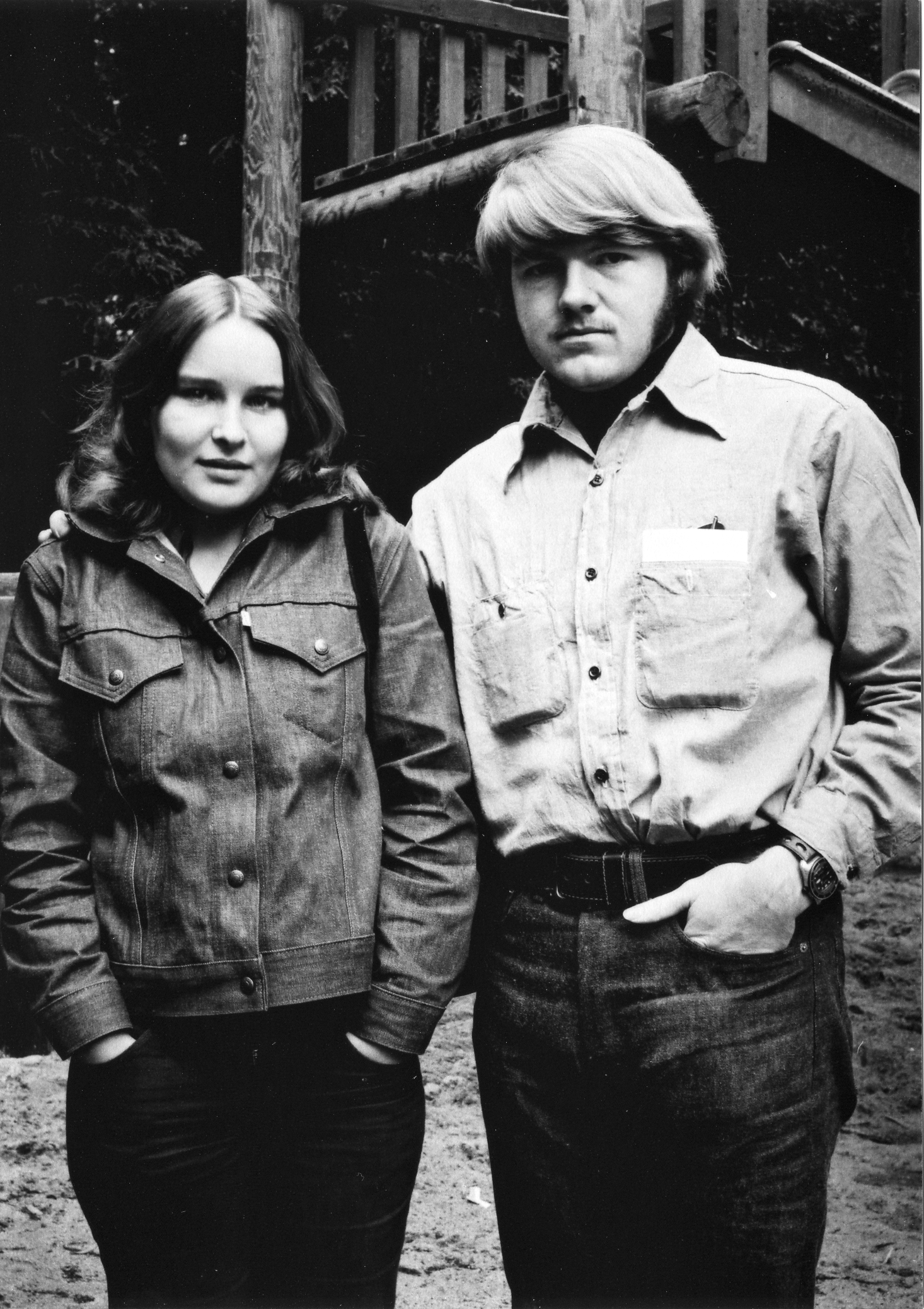
1971
The occupational hazards of living with someone for years are many. Among them is the ability to know that they will wear the same shirt and trousers together at least sixty percent of the time, always listen to a certain kind of music, tell a certain kind of joke, read a particular author with great enjoyment, and another for edification. They will almost always eat the same foods, drive the same way, enjoy the same people, and want to do the same things for relaxation. They become, predictable, comfortable, and taken for granted. Like an old sweater, shoes, or a favourite pair of pajamas. The occupational hazard of predictability and taking someone for granted is one of the most dangerous hazards a couple can fall into. All of the advice givers for marriage will tell you that. They will list a long list of reasons why and then tell you how to avoid doing it. All that is fine and good, but it doesn’t always apply to every couple.
For instance, I like it that you remember that I like Dr. Pepper in a glass without ice and that I tend to want to sleep on the right hand side of the bed. You know I hate it when the cupboard doors are left open and I always need the closet doors shut at night. I like it that you know I will love certain movies, and hate others, that I am crazy about musicals and I don’t care for mystery novels. You know that I am equally divided between the colours red and yellow, but that anything in hunter green will please me. You remember that I am a collector of small boxes and anything with a fox on it. I like it that you know what art I find wonderful, and that I would want to see a certain exhibit without question when it come around. I like it that you know I want Onion Rings with my burger if possible, not fries, and that I am particular about what goes on my burger.
You know what music I like, most of the time, and that we can dance, listen, and sing along to the same favourite songs thrills me. I love the old sweat shirts you wear and the jeans you just can’t part with, along with your Greek fisherman’s hat. I like it that you tell me about your computer knowledge even thought you know I don’t understand half of what you are trying to tell me. It makes me happy when you see something on the internet, or in a book, or magazine, or newspaper that you know will interest me and take the time to make sure I see it. I am always pleased when you remember my interests in literature and try to understand as I prose on and on about things that you have absolutely no interest in, yet you go out of your way to understand.
I like the way I never know if your are going to start dancing or singing at any given moment, and yet, you are sensitive to my need to do the same thing. I like the way we love to go to the same places on holiday, yet never get bored because we both like to discover new and interesting things. We even go see things that would bore the other, and take turns doing it, so we both get to see what we want and still give a gift of understanding to the other. I know you will always find our way around in a strange city, and you know that if I drive, we rarely get lost. I love the way you read so intently, and you tolerate the fact that my mind wanders and sometimes I don’t hear you.
There are any multitude of mundane things you do for me. I know you will always pick up empty glasses and do the dishes if I don’t get to them first. Not because you are making a comment on my housekeeping, but because you don’t mind helping out. I like the way you help make the beds, and help me move the living room furniture around for the third time when you thought it was fine the way it was in the first place. I love the way you will go with me to the grocery even though you hate to, and then end up buying all kinds of things I would never have thought to get. I know that if we go into a computer, hardware, electronics, or bookstore, you will spend a minimum of thirty minutes just looking around and not buy a thing, except what you went in to buy.
I know all these things about you and you know all these things about me, but does that mean we have fallen into the hazard of taking one another for granted? Are we too predictable? Maybe, sometimes.
There are the times, however, when we surprise one another with something new about ourselves. Try something new as a couple, like dancing. Discover a new talent, thought process, idea, ability, desire to learn something different. We are often amazed at how alike we are and how very different. We have been together a very long time, and I still feel that there is so much I will never know about you. Not because you hide it, but because you haven’t discovered it yourself yet. I feel that there is so much more to me than you know as well, and in time we will make these discoveries together.
You make me feel alive, passionate, funny, and intelligent. I know you are the most honest of men, you have integrity, and intelligence beyond my comprehension, and that you will do anything you must to protect your family from hurt, want, or need. You are a dedicated husband, father, friend, son, and brother. You love those who love you with an intensity that you don’t comprehend. And you are loved in the same manner. Everyone looks up to you, admires you, and tries to emulate you. I know that in your career there are few who have the abilities you possess and that you can be or do anything you wish. I know that you are loyal, determined, and strong willed and that you are a natural leader. I know that your colleagues are amazed at your comprehension and knowledge of the work at hand and in the future.
You are, in short, funny, loving, passionate, intelligent, gentle, romantic, determined, honest, caring, devoted, strong willed, and the man that I have loved for fourty-one years. Do we have the occupational hazard of predictability? Maybe, sometimes. However, I am blessed to have you in my life and that you know me so well. I can only hope you feel the same way.
Morning Awakes
 Yesterday, before turning on my computer, I made a cup of apple spice tea and stepped out on the front porch to watch the sun come over the trees.
The robins are back. Bird song and a slight breeze through the tree – along with that rooster up the road – were the only sounds. The ground as covered with frost, and it was cold enough to watch the steam rise from my tea mug.
As I stood there, the dogs came one by one and stretched, had a good, all over shake, and padded over for a morning pat. The cats wandered out of the garage and purred around my feet, looking for a handout.
One moment it was the purple and orange streaked sky of near dawn, and the second, the warm buttery yellow of the sun popped up over the trees, making every drop of frost into a golden shimmering jewel. That moment, was sublime.
The world was gilded in gold, and the world stood still for a millisecond, and let me have that wonder and joy.
With a deep sigh, a feeling of peace descended and I turned to enter the real world again.
Its The Little Things

He doesn’t remember important dates like anniversaries and birthdays.
He doesn’t like to buy expensive gifts and things that don’t pay.
He doesn’t always think ahead when he starts to speak,
He doesn’t do the romantic, when the practical will serve to treat.
He isn’t always sensitive to my moods and needs,
He isn’t always there for me, or, maybe, that’s just how it seems.
He isn’t always careful, and he can be a dreadful tease,
He isn’t always kind, but he tries to be.
But none of that really matters, because he so good you see,
At all the little things.
He takes me out to walk about and gaze at starlit skies,
He tickles me and makes me laugh until I cry.
He swings our girl out on her swing and tells her lovely tales,
Dances in the living room with her toy dolphins and whales.
He runs down the hall in fear of her monsters there,
and dresses up and drinks her tea – then he makes me swear.
Not to tell a soul and always to conceal,
That he’s just a big old softie when it comes to a certain little girl.
He washes dishes and does laundry when I’m sick and ill,
Cares for me and worries deep and still –
Laughs at my paltry jokes and listens patiently,
As I spout long and loud on things that bore him patently.
It’s the little things you see, that make me love him so,
And I will continue to, as long as stars will glow .
He makes me feel all warm and loved deep inside,
Even though all that mushy stuff makes his face glow bright.
For he feels silly and odd, being romantic and such,
But that doesn’t matter, its for all the little things that I love him so very much.
It Coulda Been Worse
The old man sat in the lawn chair by the newly set headstone, and gently traced the name of his wife of over fifty years. As his hands caressed the words following her personal particulars, a soft smile came to his face as he read the epitaph. Quietly he said the words, “It coulda been worse.”
His mind wandered back over sixty years to a hot summer day on a dusty street in a small town in Oklahoma. An old tin Lizzy clanked and clattered down the road, and shuddered to a stop in front of the general store. With a loud bang and hiss, the car seemed to lie down in exhaustion as the doors burst open and a teeming mass of children and dogs tumbled out in a seemingly endless stream. The last one out was a small red haired girl. Covered in enough freckles to compete with the local red-tick coon hounds, and wearing a faded dress patched with cotton flour sacks, she stood on the running board like a queen surveying her kingdom. Hopping down she stood appraising the old car, sighed and said, “Well, it coulda been worse, we coulda broke down in the desert miles from water.”
The small, ragged boy, who had watched the whole show, grinned at her words, grabbed his slingshot and sauntered over for a closer look. He looked the girl up and down, stuck out a grubby hand, and said, “Hey, my name is Henry Oxley, Y’all stayin’ here?” She grinned a gapped toothed smile, pointed at the car, and asked him, “What do you think? That car ain’t goin’ no place soon. If’n thar’s work here my Pa’ll stay, and I’m Maude Tuttle. I know it’s an awful name but it coulda been worse, I coulda been called Mud Puddle.” Her words took the wind right out of Harry’s sails, because Mud Puddle would have been exactly what he would have called her the first time he had a chance. Maude had a way with things like, that, she’d say just the right thing to take any chance of hurt out of a careless word.
Henry and Maude soon became the best of friends. Anywhere one was, the other was sure to be right behind. Harry took a lot of teasing from his pals for a while, until Maude stepped in and showed them she was just as good, if not better than they were at throwing a baseball, spitting, and stealing the occasional watermelon to share down at the creek on a hot summer afternoon. Before long, Maude became a regular member of the small group of poor farm kids who ran free in the woods around the small town that endless summer.
The years went by and they shared all the adventures of their lives from getting caught skipping school to go fishing, to getting lost in the snow on the way home from town one day. Maude could always be counted on to find something positive about situation just when it seemed at its worse. The words, “It coulda been worse” became her trademark statement, and darned if she wasn’t able to come up with a reason why it could have been every time. On the day they nearly froze to death when they were twelve, they had managed to wander into a barn and after groping around in the dark, they found enough hay to make a place to sit. Huddled together to stay warm, teeth chattering, hearts filled with fear, and bellies rumbling with hunger she turned to Henry and said, “It coulda been worse, we might lose a finger or a few toes, but at least we didn’t lie down and die in the snow.” Henry, who had been contemplating life as a fiddler wasn’t too amused, but he could see her point. When they were finally found the next morning, Harry got a visit to the woodshed with his Dad, but it coulda been worse, his Ma coulda kissed him in front of everyone like Maude’s Ma did her.
When Maudie turned 14 something mysterious and strange began to take place, she turned into a woman. That caused no end of confusion to poor Henry. His best pal went from being a grubby, dirt covered, barefoot ragamuffin in torn overalls to being a Female, with a capital F. She wore dresses, and, heaven help him, took to washing her face every day. It was just downright disgusting. Until one day he happened to really look at her and realized that she sure coulda been worse on the eyes that she was. It took a year or so, but Henry finally grew up enough to appreciate Maudie’s new looks. Soon they went from seed spitting contests and shooting at trees with sling shots, to exchanging shy smiles and holding hands when no one was looking. It didn’t surprise anyone when they told their families they wanted to marry when they grew up. After all, as Maudie put it, it coulda been worse, at least Henry would always have a job working on the family farm.
Life has a way of changing the best of plans. War broke out across the sea and the enemy had to be stopped. Like all fit young men, Henry volunteered to defend his country. Maudie and Henry married in a quiet ceremony on a Sunday afternoon at the local church. It wasn’t much of a celebration because Henry was going off to war then next day. As he stood next to his brand new wife, he tried to say all the things in his heart, and apologized that her wedding day was so simple. Maudie, smiled her sunniest grin and said, “Oh, Henry, it coulda been worse, if I’d had a big fancy wedding we would have had to invite all the folks we don’t like. This way, it was just those we love best and the Lord,” and darn it all, if she wasn’t right.
Henry went off to war for four long years. He wrote letters home to Maudie, letters that she would read over and over before putting them in an old cigar box that she tied with a pink ribbon from her bridal flowers. Henry didn’t talk much about the war, he would write about the things he wanted to do with the farm when he got home. He would talk about the men he served with, and once he told her about running into Junior Bonham in a small town in Italy in the middle of a battle. She wrote back every week, and reminded him of the things of home. She would tell him about the baby chicks that she found under the corn ric in the barn, the new calf that old Maisy gave them each year. She talked about his brothers and how John went off to war as soon as he was seventeen, but before he left he married Suky Williams and they made him an uncle of a baby boy. She told him about moving in with his parents when his Ma came down with pneumonia after working in the rain too long, and that she just stayed on because his Ma was never strong again. She told about the way they did without tires and gasoline for the war effort, and she said that sugar was harder to find than hens teeth, but it coulda been worse because at least they could cook up some sorghum for sweeting. But she didn’t tell him that once a month she would go to the movies in town and watch the news reels in hopes of seeing his face as the soldiers marched by the cameras.
Then one June day, just when the corn was about knee high, Henry came home. She was bent over the old wash tub in the front yard, scrubbing the mud out of yet another pair of overalls for one of the younger boys. She looked up to see him standing at the yard fence with his duffel bag slung over his shoulder and a tired look in his eyes. Well, she thought, it coulda been worse, my man is alive and whole, Junior Bonham never came home. Henry just stood and stared at his Maudie all grown up. And when he finally took her in his arms, all he could feel was that he was thankful to his bones that he had her to come home to. Henry was always quiet when it came to talk about the war. He didn’t bring it up, and he never made it sound as fun as the other boys did when they came home in twos and threes, he just quietly folded up his uniform and took that old duffel bag up to the attic and never took it out again.
The years slowly rolled by and Maudie gave him a house full of kids to raise in the old home place. His Ma and Dad passed on, and he took over the farm while Maudie raised kids, kept house, and filled a garden with plants to give them a root cellar full of food every winter. They lived through hard times and good times, standing together when they needed and always loving each other even when she was spitting mad at something he had done, or he was worried about money and took it out on her. There were moments that stood out in his memory, like when their first baby was born in the middle of winter and caught the whooping cough and almost died. Maudie fought for that baby boy with all her soul and strength. When he finally started to mend, Henry held her in his arms as she wept in exhaustion and relief. There was the time he got caught by the falling tree when he was logging in the winter to make ends meet. When he came limping in with a broken leg and stitches in his head, she just shook her head and went about trying to figure how to make it with him laid up for weeks.
In good times and bad, Maudie stood strong for her family. When things were bad, she would always find a reason why it coulda been worse. She helped her neighbors, served with the ladies in her church, took care of the old and the young, laughed her big laugh, and cried silent tears, but she always just kept on doing what she thought was right. When she was a young mother, she’d come to town on Saturday with a gaggle of red headed, freckled faced kids following behind and as they grew older, she would often be seen with one of her grandchildren holding her hand as she did her shopping. And always near would be her Henry with his quiet ways and slow smile to compliment her.
One day Maudie realized she wasn’t feeling too good. Her red hair had long since turned white, and her freckles competed with age spots for space on her skin. She was bent and slower, and soft in all the right places, with a lap just perfect for a grand baby to sit on. She finally took herself off to see the young man who said he was a doctor and he told her that she was going to die. Well, he put it nicer than that, but Maudie knew that is exactly what he meant. She went home and took a long look around at the farm, talked to the grandson that worked there and who was taking on more and more as Henry slowed down a tad, and decided it was time to settle her life.
Maudie gave away all her treasures to her family and friends. When she gave the old cigar box of letters to Henry, she made him promise not to destroy them but to pass them on to their kids when he was ready. She wrote long letters to her children and grandchildren, and she spent hours sitting quietly remembering the past with Henry. He knew she was sick, everyone did, but they all carried on like she wanted them to, pretending she would be there forever. In a way she would be, because every now and then there would be a little red headed, freckled faced girl crop up among the grandchildren who looked just like her. Or there would be an ornery grandson who laughed her big laugh and smiled with her gapped toothed grin. But Maudie knew she was dying, and when it came time to say goodbye, she took the time to see each one of them alone and whispered encouragement, hope, and love into their ears and hearts.
One hot summer day, Maudie was sitting on the front porch in her favorite chair, she turned to Henry and said, “Well, Henry, I guess its time to go. It coulda been worse, at least I stayed around this old town for nearly 60 years.” That night, Maudie died in her sleep.
The funeral was attended by just about everyone in the county. Every farmer, storekeeper, and rancher knew Maudie Oxley. Her family took up five rows in the church, Henry thought Maudie would have been proud to look down and see so many of her kin folks there. They buried her next to his parents in the cemetery by the old church. Henry turned into an old man over night.
That day, as he traced her epitaph, he whispered to his Maudie about all the things that were happening in the lives of their children and grandchildren. He told her of his loneliness and how much he missed her. Henry folded up the old lawn chair, tears rolled down his face as he said, “I know you’d say it coulda been worse, but Maudie with you gone, I just don’t know how it could be.”
Fairy Story (for Crystal)
“You could dance,” she said, to the small fairy under the oak leaf, in the moonlight with silver streaks in your hair. “Or, you could walk the edges of the shadows and dare the night to catch you. Come along, no time to weep, we must begin the revel, and you must put away your sorrow. Tonight you will learn to laugh away the sadness and find joy for tomorrow. Come, out from there. You are not a child any longer, live you will, live you must, and the mortal man you have loved, will, in time, become less and less of a memory. Come, dance, it will lift your heart from its depths of unhappiness.”
In a swirl of moonlit silver the queenly figure danced away to a tune only heard in the fairy ring, deep in a forest glen. The pipes and drum were played swiftly in a crescendo to match the flying notes of the violins. The small glen was awash with swaying and prancing minute figures, who, in sudden joy, would unfurl wings of shimmering gold and float far off the ground , spreading an incandescent light all about the trees.
One, however, sat alone under the oak leaf near her home tree, knees locked in her arms, head down, weeping. She had just arrived from the outer world of humans, a world where, for many of the human years, she had lived the illusion of being one of them. A time, when against all advice from her fellow fairies, she loved a man. And, as these things often do, he aged, grew tired, and finally, despite all her magic, died. She grieved there among the leaves, and saw no joy in the morrow. The small fairy felt so odd being back to her given size after all those years away. She didn’t feel free, she felt small and insignificant. Sitting alone, the near shadows creeping ever closer, the soft silver of her hair hid her face and the deep green eyes so common among her kind. Her magic aura kept skipping around her, first purple, then green, then a bright, glowing gold, but she took no notice. She wanted to be alone. Alone, so she could suffer and no one would tell her nay.
In time, the fairies tired and flew away to homes and beds among the trees. The music stopped and the musicians fell asleep under the nearest toadstool or flower, content that they would be safe in the magic around them. As the stars faded one by one and the sun began to turn the deep night into dawn, the fairy stirred from her place and stood to face the ever brightening east. One loan piper watched and began to play a soft, somber melody. In a clear, sweet tone, the music reached into the heart of the sad little fairy and she began to dance. She danced for the long years she and her man would be apart, for a fairy lives nearly forever. She danced for the sorrow she felt, and she danced for solace from pain. Around the fairy circle she danced, twirling and leaping in an every increasing frenzy. Then, when it seemed she must take flight to survive, she dropped to the soft green grass, and slept.
The piper, alone in the magic of the small fairy, stared at her in awe. For never had he felt such power, such magic, from within the circle. As the fairy slept, the sun rose higher, creeping across the glen, ever closer to her. Its warmth sent rays of comfort to her heart and mind as she slept the cleansing sleep. One stood watch, the piper, and in time he placed a leaf over her for protection and added warmth. All the day long, as shadow chased the sun, he watched and tended the needs of the powerful, yet sad, little fairy.
As all things do, the day came to an end. One by one the revel makers came back to dance under the full moon, only to stop when they saw the gentle fairy asleep in the midst of their circle. They came one by one, quiet and in reverence, for the piper told all in the silent fairy language – from mind to mind – what she had done. They stood, waiting for the magic to begin again, so that they could, too, partake. Slowly she stretched her arms and legs, rolling on to her back. A yawn later she was standing before them in all her silver glory. She smiled, and the crowd of fairies gasped at the beauty of her face. Then in a voice, soft, sweet, and warm as honey, she told them of her dream.
“I danced, alone in a garden circle, filled with the aroma of roses and lemons. I danced alone, in the magic of moonlight, with a piper only to urge me on. I danced, in joy, in sorrow, and in pain. I danced for love, for suffering, for solace. I danced, to complete my circle and to end from whence I began. Alone, I tread the world of mankind. Alone, I tread the circle. In my dream, my true love came, not the passion of youth. I took his hand, felt his magic, and knew eternal love. In my dream, I am whole, in my dream I am true, in my dream I am magic. And now I wake, surrounded by love. I know that I am home.
I will miss the man of my youth, I will love him always. But here, among the fairy ken, I will find a magical joining.”
All the males surged forward, hoping she would hand-fast them, for her beauty and magic shown about her. But, she turned and walked to the edge of the shadows, and took the piper’s hand. “This male,” said she, “will fill my life with gentle compassion and love. I, in return, shall be his muse, and magical music there shall always be.” She bowed to the queenly figure, who bowed in return, and walked away through the trees. Now and then, when the wind is right, and the moon is softly full, wanderers will hear a sweet melody played upon a pipe. In their hearts a yearning will grow to turn to the one they love, to hold them and tell them so. It is, of course, the small fairy and her piper, leading hearts to hearts still yet, for they will live nearly until forever.
K.J.Combs
26, November, 1998
Inspirational Women
In my lifetime there have been many women who have inspired me to be a better person. It is difficult to choose one above the others, so I want to share with you, instead, several women who have inspired me.
When I was a little girl, my great grandmother, Sylvia Underwood Vandenburg, set the example of what a mother, grandmother, and great grandmother should be. She inspired me through her unrelenting work to feed, clothe, and educate her family. Grannie raised four children of her own, then raise six grandchildren in her home, when their parents abandoned them, while other grandchildren came and went on an as needed basis. She then raise three great grandchildren when her grandson divorced and needed someone to help take care of his kids while he worked.
Grannie was the finest example for sacrifice and service I have ever known. Her garden provided food for her family, neighbors, and anyone in need of food. She cooked for an army of people every day and lunch at Grannies was an event that stood until a week before she died. Because we are a farm family, lunch was the biggest meal of the day. It didn’t matter if we dropped in at the last minute, or if we brought along friends, Grannie always had enough food, and would just smile and “add another potato to the pot,” to make sure the meal stretched for everyone.
Her garden also provided flowers for everyone from new brides to the old and infirm. Her fingers sewed an unending supply of dresses, shirts, quilts, and dishtowels for all of her progeny and our friends. To have a quilt made by Grannie Vandenburg was the best wedding present any girl in the family could have. And when each of us had our first baby, and sometimes third or fourth, as long as she could see to do it, she made us a baby quilt. Those are held as sacred heirlooms by all of us.
Grannie was a small, quiet, homely, uneducated woman who was widowed at the early age of 50. Her life was hard, especially by today’s standards, but she was a tower of strength when it came to protecting her family. She always had the right advice, loving hug, or swat on the bottom for all of us children. She was wise, caring, possessed a wicked sense of humor, and she was one of the most spiritual women I’ve every known. All my life I have wanted to be just like her. To me, Grannie was exactly what a real woman was supposed to be. She could hoe a cotton field, do all the weekly wash, work in her garden, provide three meals a day, and still have time to sit quietly listening to a child struggle to learn to read at the end of a long day of work. Today, when I am sad or feeling lonely, the aromas of vanilla cookies and talcum powder bring back the feeling of unconditional love and security Grannie gave to all of “little ‘uns.”
When I was 26 I joined the church. In the small branch I attended in Harrison, Arkansas, there was a group of women who taught me what being a member was all about. Andrea Lewis, Mary Tasto, Marlene Lovelady, Ruby Essex, Eydie May Abell, and Candy Lovelady set the example for a very new and insecure sister over the six years I lived in Harrison, Arkansas. Each of them taught me in their own way. The older women, Andrea, Mary, and Marlene, who were each old enough to be my mother, gave me an ideal perspective on how to serve, teach, pray, and do visiting teaching. Mary taught me that the church was a place I could laugh, as well as shed tears and that I was too serious about every aspect of the gospel – something sacred didn’t mean something to fear. Andrea taught me that visiting teaching was much more than a lesson and a quick chat as we served together. She and her husband, Joe, were the couple I wanted Hal and I to learn to be like the most. I learned so much about service from Marlene, and those lessons still stand as my litmus test for how well I am doing. Ruby is the most spiritual of women whose calm devotion and knowledge in the gospel and in her testimony helped me to build on the basic knowledge I had as a new member. All of them are what I call prime examples, and it is my opinion that those four women are, in fact and deed, the best of the daughters of God.
The two younger women, Eydie Mae and Candy, were my first two friends in the church. For six years we raised our kids together, served together, struggled with our testimonies together, and built a friendship that still stands today. We were known for our silly antics, like the time they kidnapped me on my 30th birthday and took me to a big surprise party. We were known for being the terrible trio, because we were always up to something. We served in numerous callings together and shared every aspect of our lives.
In those years of learning and becoming a stalwart member of the church, they taught me to believe in myself, to laugh loud and long in joy, and to weep tears of sorrow without shame or embarrassment. Eydie Mae took the complex doctrines of the church and helped me see that the gospel is really quite simple, we make it hard. Candy taught me about dedication and strength. The two of them became my sisters in such a deep and meaningful way that no matter what happens, I will always stand by them.
Today they both live in Florida, and I live in Hong Kong. I miss them very much on days when I am feeling alone. But, all I have to do is wander in to my memory and find something that brings me joy, a laugh, or a comforting thought. I miss the wonderful small branch in Harrison. It is, and always will be, my home ward. The women there still set an example for me. And I will always yearn for those days when I could sit among them and feel the divine love and spirituality that makes them all so unique.
Finally, the women on the Sister’s List stand out as the most amazing women I’ve ever known. I admire their knowledge, spiritual joy, and ability to join together in the best Relief Society every created. When I am down, or angry, or hurt, or frightened, or worried, I just send an email. Within minutes, or at most, hours, I am sent words of comfort, peace, understanding, and usually a laugh or two. They even get indignant and angry on my behalf, and we all solve the world’s problems regularly, with laughter, and most of all, with compassion. I have learned the power of prayer from them, the importance of sisterhood and the ability to communicate and share our knowledge of the gospel principles. I have learned strength, and I have learned that no matter how hard things are, together we can overcome even the most horrific of worldly things. The awesome power of women who work together to accomplish miracles is proven daily by the women on the Sister’s List.
I am eternally grateful that the Lord has provided us with computers and the Internet. I am grateful that I couldn’t sleep one night and surfed into the LDSCN site all those years ago. I am grateful that my testimony has grown in leaps and bounds by the profound example of the testimonies of the sisters I have come to love even though I have never met them in person, or even heard their voices. I look forward, one day, to traveling to meet them. But if that doesn’t happen, I know I can look forward to meeting them on the other side. I know I will know them, all I have to do is look for a bunch of women who are laughing, and talking all at once.
I am so blessed.
Changes
I was thinking about Grandmother today. She is in her late nineties. Nearly one hundred years old. I started listing, in my head, the changes in the world in her life time. She was born, raised, and has lived all her life right here in Oklahoma. When she was a girl, there were no highways, no cars for the farmers and ranchers, no electricity in every home, no indoor plumbing, and no telephones. Laundry was done in vats of water heated over an open fire in the yard, and hung to dry on fences and bushes. Bread wasn’t made in a bread maker or picked up at the grocery, it was homemade, sweets were a luxury, and the most common form of transportation was one’s feet.
Grandmother has seen the coming of air flight, men walk on the moon, and space exploration. The modern age of medicine that can keep a person alive, almost indefinitely, began in her lifetime. Today, there are cures for disease that used to wipe out whole generations, and that cure is one dose of medication. Today, there are diseases that were unknown in her days as a mother that can devastate and devour children and adults, and we still have no cure for them. But, maybe, when we are nearly one hundred years old, there will be.
She had never heard of computers, modems, the internet, or Microsoft, and still thinks computers are toys that just beep and make noise. Grandmother never played with a Gameboy, skateboard, or had a dolly that talked, drank a bottle, and had to have its nappy changed. She was doing the work of a full grown woman at the age of 14, not talking on the phone and wondering when her parents were going to understand her. She was much too busy, cooking, cleaning, working the farm, and looking after her family to worry about such mundane things. It wasn’t because her parents were mean, it was because everyone had to work together, and work hard, to survive from year to year.
She watched the oil boom and bust here in Oklahoma again and again. She saw the slow pace of the world around her become faster each generation, until it seemed to spin by so quickly it made her dizzy. In her day, courting was done on a Friday night, or Sunday afternoon after church, in front of the entire family, and a kiss was a commitment. Movies were not common, and when they finally came to her town, it was an EVENT to go to a movie. Smoking was something men did, and if a woman smoked, well, she was fast. After the cultural changes that took place in World War II, grandmother still thought women who smoked were fast, but she learned to adjust like everyone else. She saw women move from the home to the workplace, first as they needed to support families torn by war, then as the feminist movement dictated.
She once told me that she understood why so many women wanted to work outside the home, after all, the house practically takes care of itself. Look at all the modern appliances now. Vacuum cleaners, no more need to move and beat rugs every week; refrigerators, no need to have ice delivered or bottle foods and put them in the cellar; washing machines, no need to spend the day bent over a scrub board and washtub. Chemicals that clean and scrub all by themselves, air conditioning, and heating that doesn’t require the chopping, hauling, and use of wood to warm the house. Frozen foods and microwave ovens means that a meal can be prepared in minutes instead of hours. With that much time on their hands, women were bound to want to go to work.
In her life time, she has lived through two world wars, Korea, Viet Nam, and Desert Storm, plus many other warlike crises that involved the United States. She has seen the advent of equal rights, feminism in its modern form, women in the workforce, commonality of divorce, welfare replace charity organizations, the move from an agro-economic based state to an oil/industrial based state, and cycle of birth, life, and death repeated over and over.
There are four GENERATIONS of family living who are all directly related to Grandmother. Each on has gone through the trials of its particular age. Grandmother gave birth to three boys. One became a lawyer, one a doctor, one a businessman. None of them stayed on the farm, and when Grandfather retired, they moved to town too. Her husband served in World War I, all of her boys served in World War II, and her grandchildren in other serious actions. Her boys were in the first generation to be in the mobile age, cars became common, and life started to move faster.
Her grandchildren were in the midst of the “revolution” of the turbulent 60’s and 70’s where cultural, social, and family standards were obliterated and rebuilt into something most of us are still trying to figure out. Her grandchildren were the first to shout about “rights” and experiment with sex, drugs and rock and roll openly.
It is her great grandchildren’s generation who saw the advent of gender issues, openness of alternative lifestyles, lifestyles, by the way, that grandmother still whispers about in vague euphemisms because they embarrass her mightily. Her great grandchildren have taken the word “alternative” and turned it into a an icon for whatever they want to do since there doesn’t seem to be a particular pattern to follow any longer.
Her great great granddaughter is just four years old, but already understands how to use a telephone, computer, and all about money. She knows the microwave will heat things, and the refrigerator will keep things cold. She knows more about television and how it works than Grandmother ever will. She knows more about the world at four than Grandmother did at twenty, or even thirty, because she has been on a jet plane to England, she has gone across the United States in a car, and visited the great monuments to the past. Her world is even more complex than that of the previous generation, and one can only suppose what will come in the future.
Grandmother won’t be with us much longer. She is a tiny, withdrawn, elderly body that sleeps most of the time. She needs twenty four hour care, and she will probably never remember my name again. She deserves her rest, and our deepest respect. Grandmother has become an icon, a symbol, of all that glued this motley crew together as a family. She is the last of her generation, the beginning fabric of all of us who live and when she dies, we will begin, slowly, to unravel into separate groups, until all who knew her are gone as well.
It is our progeny, then, who will remember us as we remember her. We will be the old folks who were so odd with their love beads, pot, and wine. The old folks who wore funny clothes, used archaic communication devices like telephones that plugged in, and the internet. We will be the ones that our progeny look back on with affection, and, hopefully, respect. Like Grandmother, we will weave the fabric from whence our family grows. Will we, like Grandmother’s family, slowly fray and unravel? Probably, but that is the beauty of it all, because each succeeding generation gets to weave a new pattern based on the history and colours of the last generations. By adding a bit here and a bit therefrom the past, and new colours and patterns from their lives, the fabric lives on and on. Sure the stitches and weave are different, but the threads of life are all tied together and become stronger as each generation grows. That’s what family is all about. Grandmother would approve.
 Not In The Mood For Small Talk